Understanding Your Legal Obligations for Welding Fume Extraction
Welding fume is a serious health hazard, with the HSE estimating that exposure to metal fume leads to 40 to 50 welders being hospitalised each year. Since 2019, the HSE has required that general ventilation alone is no longer considered sufficient to adequately control exposure. For any business where welding takes place, these are well-established legal requirements and many sites are still not fully compliant.
Why Welding Fume is a Health Risk
Welding fume contains a complex mixture of metallic oxides, silicates and fluorides, the composition of which varies depending on the materials being welded and the process being used. Prolonged or repeated exposure has been linked to serious respiratory conditions including occupational asthma and lung disease. In 2019, the International Agency for Research on Cancer also reclassified welding fume as a Group 1 carcinogen, meaning there is sufficient evidence that it causes cancer in humans.
This reclassification was a significant factor in the HSE’s decision to tighten its guidance on welding fume control.
The HSE’s Requirements for Welding Fume Control
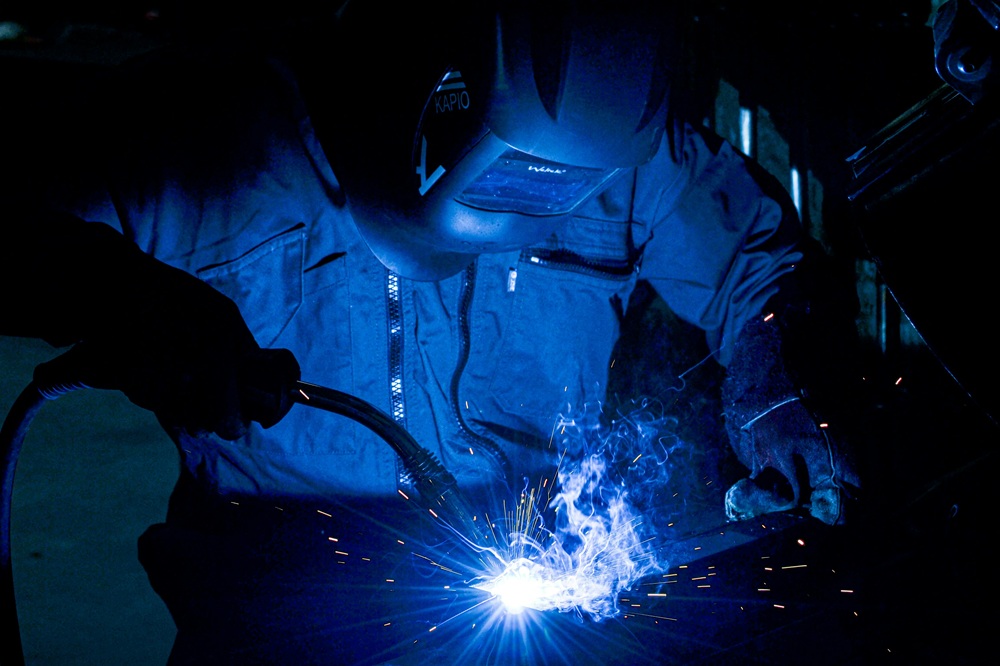
Prior to 2019, general ventilation was considered an acceptable control measure for mild steel welding in many circumstances. This has not been the case for a number of years now, and general ventilation is no longer considered sufficient for any indoor welding activity, regardless of the materials involved or the duration of the work.
The revised guidance makes clear that all indoor welding activity now requires engineering controls, with LEV for welding identified as the primary means of controlling exposure. Respiratory protective equipment (RPE) may also be required in addition to LEV, particularly where residual exposure remains after engineering controls are in place.
What COSHH Requires
Under the Control of Substances Hazardous to Health Regulations 2002 (COSHH), employers are legally required to prevent or adequately control worker exposure to hazardous substances. Where welding fume is concerned, adequate control now means using LEV as the primary engineering control for all indoor welding activity.
COSHH also requires that any LEV system used is properly maintained and subject to a thorough examination and test at least every 14 months by a competent person. Records of those examinations must be kept. Where LEV alone does not reduce exposure to an acceptable level, suitable RPE must also be provided.
The HSE’s guidance document HSG258, Controlling Airborne Contaminants at Work, sets out the standards LEV systems must meet in terms of design, installation, use and maintenance.
What LEV Must Do for Welding Applications
For a welding fume extraction system to meet the required standard, it must capture fume at or close to the source before it enters the welder’s breathing zone. The positioning of the capture hood or extraction point is critical; a system that is not positioned correctly will not achieve adequate control regardless of its extraction capacity.
Fume extraction systems for welding must also be capable of handling the volume and nature of the fume generated by the specific process and materials involved. This is why a competent person should be involved in specifying the system, rather than selecting equipment based on general specifications alone.
Portable Welding Fume Extraction for Mobile and Multi-Location Work
One of the practical challenges of welding fume control is that welding does not always take place in a fixed location. On construction sites, in shipyards, during maintenance work and across large industrial facilities, welding is often carried out across multiple locations or in areas where a fixed LEV installation is not practical.
Portable welding fume extraction systems are designed to address exactly this challenge. A portable welding fume extraction unit can be moved between locations as work progresses, set up quickly and used by a single operator in tight-access areas. Mobile welding fume extraction units can be configured to support larger operations, including setups with multiple extraction points.
SA Equip’s SA ENDURE portable and mobile LEV systems are built for these environments, compliant with ISO 21904-1:2020 and HSG258 and designed to meet the control requirements the HSE now expects for indoor welding activity.
Welding Fume Extraction Hire
For businesses that require LEV for welding on a temporary or project basis, portable welding fume extraction hire is a practical alternative to purchasing equipment outright. This can be particularly relevant for contractors, businesses with seasonal workloads or sites where welding is carried out infrequently.
SA Equip offer portable LEV systems for both sale and hire, providing a flexible option for businesses that need to meet their COSHH obligations without committing to a permanent installation.
Getting the Right System in Place
Meeting your legal obligations for welding fume control starts with understanding what the Health and Safety Executive requires. It also involves ensuring the LEV equipment on your site is fit for purpose, correctly positioned and properly maintained. For many businesses, that means reviewing current arrangements where general ventilation has previously been relied upon. Despite the requirements having been in place for a number of years, non-compliance remains common across a range of industries.
SA Equip are portable industrial equipment specialists and local exhaust ventilation suppliers with experience across welding, fabrication, oil and gas, aviation, rail and defence. To find out more about our SA ENDURE LEV range or to discuss your requirements, get in touch with the team.