What is Local Exhaust Ventilation (LEV) and When Does Your Site Need It?
Many industrial operations generate dust, fumes, vapour, mist or gas as a routine part of the work. In those environments, local exhaust ventilation is likely to be a legal requirement, not just a best practice. For site managers and procurement teams navigating that obligation, understanding what LEV systems are, how they work and what the HSE expects is a sensible starting point.
What is Local Exhaust Ventilation?
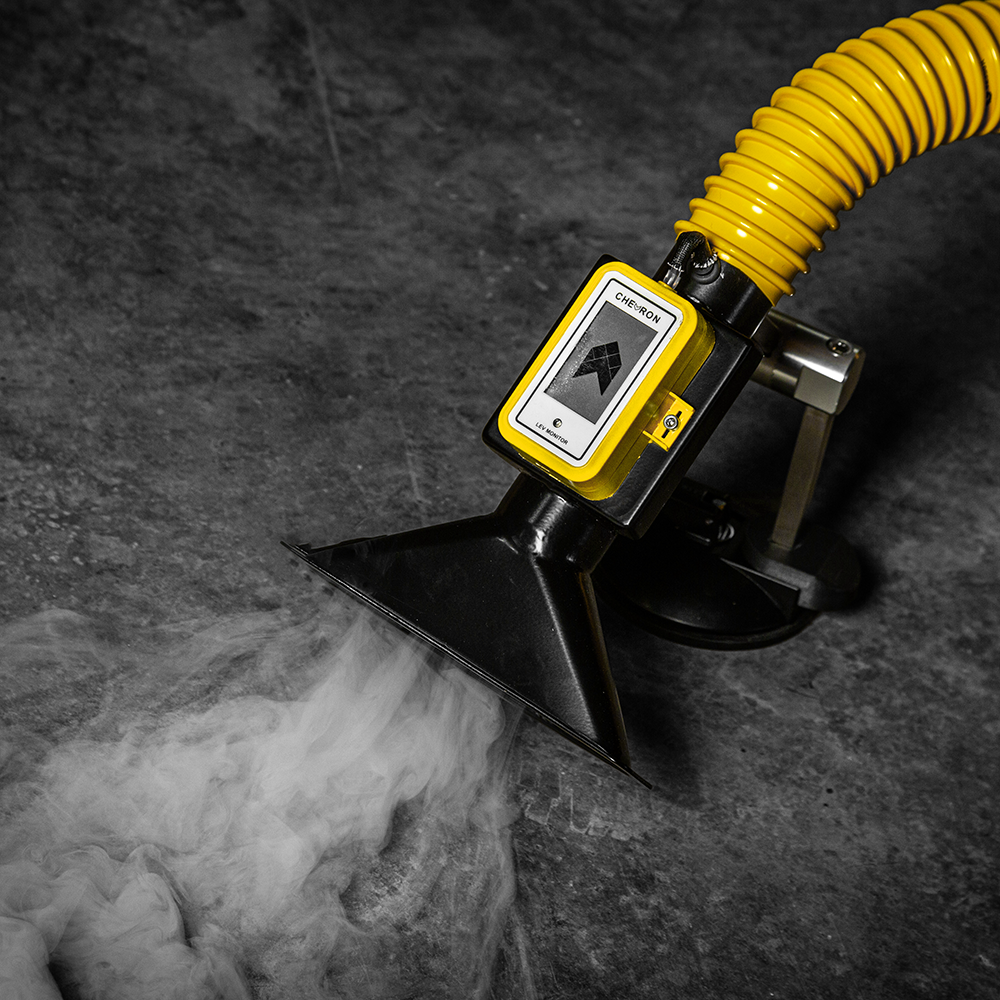
Local exhaust ventilation is a form of engineering control designed to capture airborne contaminants at or near the point where they are generated, before they can spread into the wider working environment. A local exhaust ventilation system typically consists of a hood or capture point, ductwork, a filter unit and a fan or extraction unit. These components work together to draw contaminated air away from the breathing zone and either filter it or exhaust it safely.
Unlike general ventilation, which dilutes contaminants by circulating air around a space, LEV targets the source directly. This means harmful substances are captured where they are generated rather than allowed to spread.
How Does LEV Differ from General Ventilation?
General ventilation such as opening windows, running HVAC systems or using background fans has its place, but it is not a substitute for LEV where hazardous substances are concerned. General ventilation relies on dilution, which means contaminants are still present in the air; they are simply spread more thinly. For many industrial processes, this does not meet the required standard of control.
LEV extraction systems are designed to prevent exposure rather than reduce it after the fact. Where a specific task generates harmful dust or fumes such as welding, grinding, cutting or chemical handling, a portable LEV system or fixed installation captures those substances before workers are exposed to them. That distinction matters both for safety outcomes and for regulatory compliance.
What Do the HSE and LEV Regulations Require?
Under the Control of Substances Hazardous to Health Regulations 2002 (COSHH), employers are legally required to prevent or adequately control worker exposure to hazardous substances. Where LEV is used as a control measure, it must be properly maintained and examined and tested at least every 14 months by a competent person.
The HSE’s guidance document HSG258, Controlling Airborne Contaminants at Work, sets out the standards for LEV design, installation, use and maintenance. Any LEV equipment used in a workplace must demonstrate it is achieving the required level of control, and records of thorough examination must be kept.
SA Equip’s SA ENDURE LEV systems are designed and supplied in line with ISO 21904-1:2020 and HSG258, providing a compliant, reliable foundation for workplaces that need to meet these standards.
Which Types of Site Need LEV Systems?
LEV is most commonly required wherever industrial processes generate airborne contaminants that cannot be adequately controlled by other means. Industries and applications where LEV ventilation is routinely specified include:
- Welding and metal fabrication, where fumes generated during the welding process present serious respiratory risks. Portable LEV systems are particularly useful here, as welding often takes place across multiple locations on a single site.
- Construction and demolition, where dust from cutting, grinding or drilling materials such as concrete, stone and engineered wood can contain silica or other hazardous particles.
- Chemical processing and pharmaceutical manufacturing, where vapour, mist or fine particulate matter may be generated during production or handling.
- Oil and gas, where confined or semi-confined environments make controlling airborne contaminants more challenging and the consequences of inadequate ventilation more serious.
- Aviation, rail and utilities, where similar challenges apply and site conditions can limit the effectiveness of general ventilation.
If your site involves any process that generates dust, fume, vapour, mist or gas and those substances could be harmful to health, LEV is worth assessing as part of your COSHH obligations.
Portable LEV for Mobile and Temporary Works
Not all LEV requirements call for a fixed installation. Portable local exhaust ventilation systems offer the same level of extraction performance as a fixed installation, in a format that can be moved between locations, set up quickly and adapted to different tasks. This makes them well suited to sites where work is mobile, temporary or spread across a large area.
SA Equip’s SA ENDURE range includes portable and modular LEV options designed for exactly these environments. The portable unit is built for single operators working in tight-access areas, while the mobile LEV system scales to support larger projects with multiple extraction points. Both are compliant with ISO 21904-1:2020 and HSG258.
Choosing the Right LEV Equipment
Selecting the right local exhaust ventilation system depends on a number of factors. These include the nature of the process, the substances involved, the layout of the site and how frequently and where the work takes place.
SA Equip are portable industrial equipment specialists and local exhaust ventilation suppliers with experience across oil and gas, aviation, rail and defence.
We can support you in identifying the right LEV equipment for your site. To find out more about our SA ENDURE LEV range or to discuss your requirements, get in touch with the team.