How ATEX Dehumidifiers Protect Hazardous Sites from Moisture Damage
Damp air rarely causes a fuss on an industrial site. There’s no alarm and no obvious mess, but it slowly eats into steel and equipment and the damage tends to show up when a job is already under way. The usual answer is to dry the air out, which gets trickier where an explosive atmosphere could form, because an ordinary dehumidifier isn’t safe to use there. A certified ATEX dehumidifier is built for exactly that situation. To see how one fits in, it helps to start with what damp air does to a site.
Why Is Moisture a Problem in Hazardous Areas?
What makes damp air awkward is that it never looks urgent. Water vapour settles on metal and speeds up corrosion, so tanks and pipework can begin to deteriorate long before anything looks wrong. Electrical and instrumentation equipment suffers too, because long spells in damp air take a toll on it and the cost builds up quietly over time.
Condensation makes things worse. It forms when a surface is cooler than the air around it, so cold steel in a warm, humid space picks up a film of water that keeps working on the metal. Enclosed areas suffer most, because condensation in a confined space has nowhere to go when the airflow is poor. It’s a familiar problem on oil and gas sites, where tanks and pipework make up much of the plant.
Keeping humidity down helps reduce corrosion risk, although it works best as one part of a wider maintenance routine rather than a cure on its own. It also sits alongside ventilation and heating in a wider approach to climate control that balances safety and efficiency. That leaves the question of which equipment is safe to use.
Can You Use a Normal Dehumidifier in a Hazardous Area?
A standard dehumidifier isn’t designed for places where an explosive atmosphere may form. Ordinary electrical equipment can be an ignition source and the aim in these areas is to keep ignition sources out. That’s why equipment used in zoned areas has to meet the Equipment and Protective Systems Regulations 2016 and why an explosion proof dehumidifier is built and certified for these conditions.
Zones are how those areas are graded, based on how likely an explosive atmosphere is and how long it would last. In gas areas, Zone 1 means it’s likely to appear now and then during normal running, while Zone 2 means it’s unlikely and wouldn’t stay for long. Zones 21 and 22 follow the same logic for dust and the same grading decides which lighting suits gas and dust zones.
Certification isn’t the same as site approval, so a unit’s certification has to match your site’s zone classification. Under the Dangerous Substances and Explosive Atmospheres Regulations, classifying the area is the employer’s job, so we can’t tell you which zone your site falls into. That decision belongs in your own risk assessment.
How Does an ATEX Dehumidifier Work?
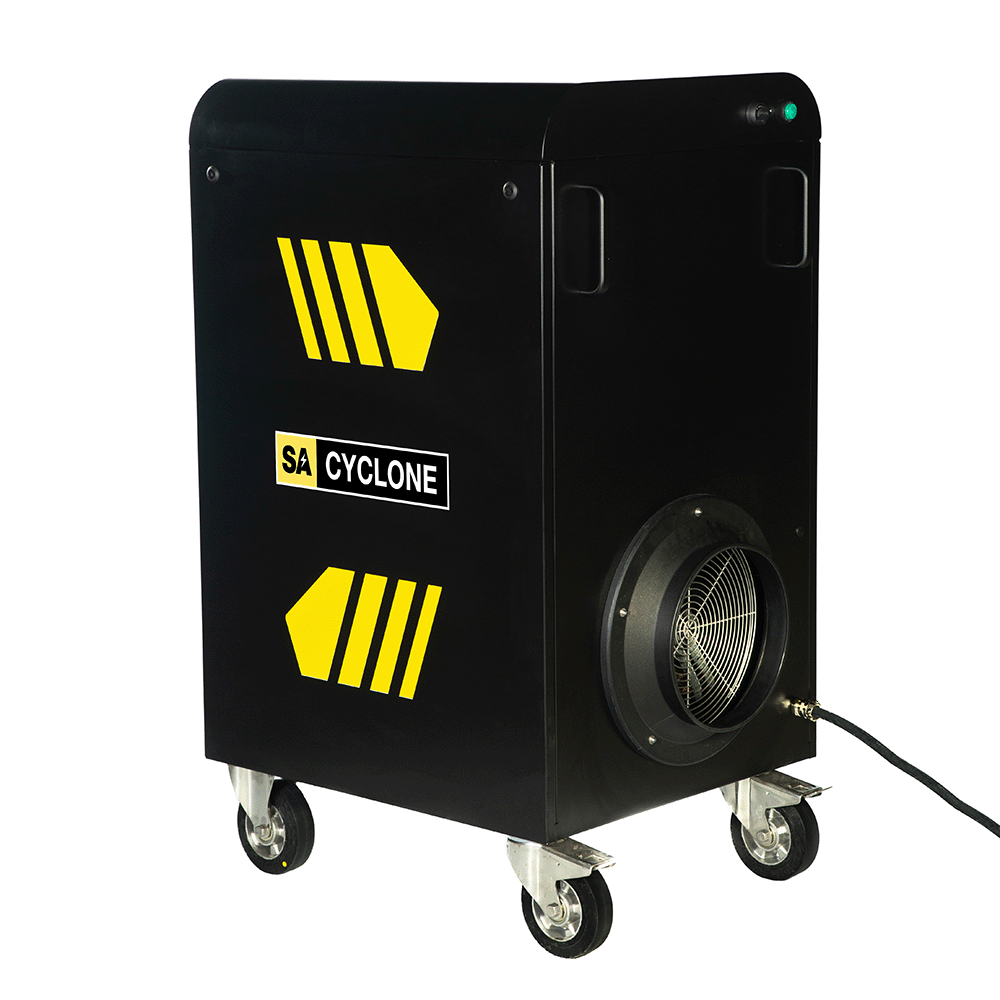
The principle is simpler than the certification might suggest, because a hazardous area dehumidifier does the same basic job as any other. It draws humid air in and returns it drier, with the water collected along the way. How much water comes out depends on the temperature and humidity on site. That’s why we describe the output of our SA CYCLONE EX Dehumidifier as typically up to 200 litres per day and not a fixed figure. It’s IP65 rated, so it’s protected against dust and water jets and it’s certified for Zones 1 and 2 for gas and Zones 21 and 22 for dust.
Power is the practical point to plan for. The unit is plug and play, but it needs a 3-phase supply, so it isn’t a job for a standard socket. It’s part of our portable EX climate control range. Being portable, it can follow the work from one area to the next, which is the main advantage of portable climate control in hazardous zones.
How Do You Plan Drying on a Hazardous Site?
A dehumidifier does its best work as part of a plan. That plan starts with where the damp is and when it matters and then moves on to how the dry air reaches it. The answers differ from site to site, but working through them gives you a clear picture of what a job needs.
What Needs Drying?
Anywhere damp air can cause trouble is a candidate and these are the places to start looking:
- Tanks and vessels before cleaning, coating or inspection
- Confined spaces where condensation collects
- Freshly blasted steel waiting for its coating
- Equipment kept in storage or left idle during a shutdown
- Enclosed areas with poor airflow
Which of these apply depends on the job and your site’s risk assessment decides what’s safe to do in each one.
When Does Drying Matter Most?
Timing matters as much as location. Drying helps most before and during blasting and coating, because humidity can decide whether paint will hold and it’s just as useful during tank cleaning. Shutdowns and idle periods are another good moment to dry, since humidity swings leave unattended steel exposed.
How Is the Dry Air Delivered?
In practice, it starts with sealing off or containing the space as far as the site plan allows. The smaller the area, the less air there is to dry and the dry air stays where it’s needed. Antistatic reinforced ducting then carries it from the dehumidifier to the area.
While the job runs, humidity and temperature are monitored so you can see whether the plan is working. The whole plan should follow your site’s risk assessment and permit-to-work arrangements, especially where people enter tanks or vessels.
How Do You Reduce Flash Rust and Keep Coatings on Track?
Flash rust is the thin orange film that can appear on freshly blasted steel when it meets humid air. Blasting leaves the metal bare, so the longer it sits in damp conditions, the sooner rust starts to form and that can affect how well a coating bonds. Keeping the air around the steel under control until the coating goes on is the best protection against flash rust and drying that air helps reduce the risk.
Coatings also depend on dew point, which is the temperature at which moisture in the air starts to condense. If the steel is close to that temperature or below it, water forms on the surface. Drying the air lowers its dew point, so water is less likely to form on the steel and it’s easier to stay within the conditions the coating maker recommends. Those limits cover things like how far the surface should sit above the dew point and the highest humidity allowed and they vary by product, so always check the coating’s data sheet. Coating work also brings fumes, so protecting your team from paint fumes on industrial sites belongs in the plan alongside the drying.
How Can Dehumidification Help With Tank Cleaning and Shutdowns?

Tank and vessel work leaves bare, damp surfaces exposed to the air for long stretches. Drying the air during tank cleaning helps keep humidity down while the work is under way, so condensation and surface rust are less likely to set in before the tank goes back into service. The work has serious safety demands of its own and safe tank cleaning procedures apply whatever drying plan you use.
Shutdowns add time pressure to all of this. They’re busy and tightly scheduled and moisture problems are far easier to avoid than to fix mid-project, so drying is worth building into the plan early. Instead of using fixed, cumbersome, or multi-cable drying units that complicate transport and setup, you should choose versatile, portable equipment that is easy to move and requires fewer cables. Making this adjustment prevents logistical bottlenecks and costly planning errors during tight offshore shutdown schedules.
How Do You Choose an ATEX Dehumidifier?
Every site is a little different, so the right unit will depend on yours. It helps to run through a few points before you decide:
- The zone classification and whether the unit’s certification matches it
- The size of the space and how much moisture is likely to be in it
- The power supply available
- How the unit will be moved and positioned on site
- The ducting needed to deliver the dry air
- The temperature range on site
Once you’ve narrowed things down, the next step is to read the unit’s specifications on our datasheets page. After that, check the certificates page to make sure the certification matches your zone.
Should You Hire or Buy an ATEX Dehumidifier?
Hire tends to suit short projects and shutdowns, since you only have the unit for as long as you need it, while buying may make more sense if you expect to use one regularly. Which of the two is open to you depends on where the unit is going, so tell us your location and we’ll confirm whether you can hire it, buy it or do either.
If hire is the right fit, our rental service handles ATEX dehumidifier hire in the UK.
Damp air is easy to overlook, but it’s far simpler to manage with a plan than to repair after the fact. Starting with certified equipment that suits your zone gives you a safe footing and a drying plan built around the job helps reduce corrosion and coating problems before they take hold.
If you’d like a hand planning how to dry your site, get in touch with our team with your timescale and we’ll talk through the options.